
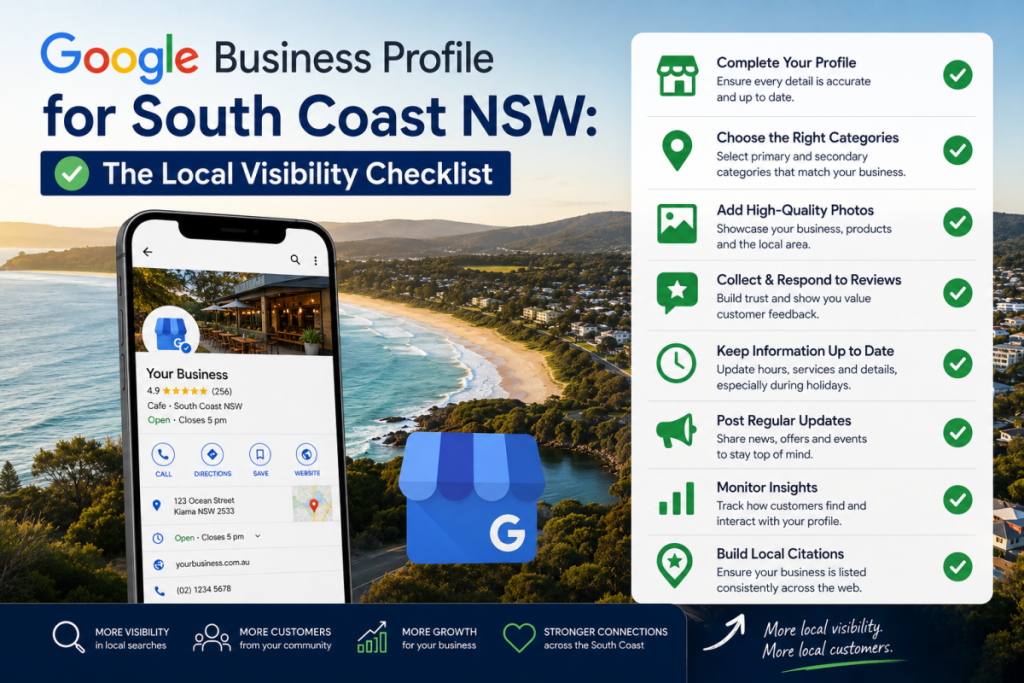
Digital marketing on the NSW South Coast rewards businesses that are useful, specific and easy to trust. The market may be smaller than Sydney, but customers still compare options carefully online before they call, visit or buy.
This guide takes a practical approach. There are no magic hacks here; the focus is on decisions an Australian business can actually use, with particular attention to Canberra and the NSW South Coast where local context can materially change how a campaign should be structured.
For Australian businesses, Google Business Profile South Coast NSW is not a matter of copying a checklist from an overseas marketing blog. Market size, geography, competition, customer expectations and the value of an enquiry all affect what sensible execution looks like. The objective is to build a system that can be understood, measured and improved.
Regional discovery often starts on the map
For trades, hospitality, professional services and local retail, the map result can be the first substantial interaction a customer has with the business. The profile therefore deserves the same care as a landing page.
In practice, this means asking three questions before adding more activity: what customer behaviour are we trying to influence, what evidence will tell us whether it worked, and what will the business do differently when that evidence arrives? Those questions keep Google Business Profile South Coast NSW connected to commercial outcomes rather than platform activity.
A useful review also separates leading indicators from business outcomes. Impressions, clicks and engagement can tell you whether a message is reaching people, but they do not prove the activity is profitable. Qualified enquiries, booked appointments, sales, repeat purchases and margin provide a stronger basis for deciding what to scale.
For businesses operating across Australia, Canberra or the NSW South Coast, the answer can vary by market. Search volume, audience size, seasonality, travel distance and competitive intensity are not identical. The strategy should be consistent enough to manage but flexible enough to reflect those differences.
A second consideration is customer intent. Two people can use similar language while being at very different stages of a decision. One may be researching, another comparing providers and another ready to buy today. Good marketing gives each of them enough information to move forward without forcing every visitor through the same message. This is why useful landing pages and articles combine education, evidence and a clear commercial next step. Measurement should also be designed before campaigns are scaled. Decide which actions genuinely indicate value, how calls and forms will be attributed, who will assess lead quality and how frequently performance will be reviewed. When those foundations are missing, teams often react to surface metrics and make changes before enough evidence exists. When they are in place, optimisation becomes calmer and more accountable. Finally, remember that consistency does not mean rigidity. A strategy can have clear principles while still changing as search behaviour, competitors, costs and customer expectations evolve. Regular review should identify what has changed, what has not and which assumption deserves testing next. That discipline is more valuable than chasing every new platform feature. That local context is especially important for owner-led and mid-sized businesses. A national benchmark can be interesting, but the decision that matters is whether the next dollar invested can produce an acceptable return in the market the business can actually serve. Capacity, response time and sales follow-up therefore belong in the marketing conversation.
Accuracy matters when customers are travelling
South Coast customers can include locals, holiday-home owners and visitors. Opening hours, service areas, phone details and directions need to be reliable, particularly around seasonal changes and public holidays.
In practice, this means asking three questions before adding more activity: what customer behaviour are we trying to influence, what evidence will tell us whether it worked, and what will the business do differently when that evidence arrives? Those questions keep Google Business Profile South Coast NSW connected to commercial outcomes rather than platform activity.
A useful review also separates leading indicators from business outcomes. Impressions, clicks and engagement can tell you whether a message is reaching people, but they do not prove the activity is profitable. Qualified enquiries, booked appointments, sales, repeat purchases and margin provide a stronger basis for deciding what to scale.
For businesses operating across Australia, Canberra or the NSW South Coast, the answer can vary by market. Search volume, audience size, seasonality, travel distance and competitive intensity are not identical. The strategy should be consistent enough to manage but flexible enough to reflect those differences.
A second consideration is customer intent. Two people can use similar language while being at very different stages of a decision. One may be researching, another comparing providers and another ready to buy today. Good marketing gives each of them enough information to move forward without forcing every visitor through the same message. This is why useful landing pages and articles combine education, evidence and a clear commercial next step. Measurement should also be designed before campaigns are scaled. Decide which actions genuinely indicate value, how calls and forms will be attributed, who will assess lead quality and how frequently performance will be reviewed. When those foundations are missing, teams often react to surface metrics and make changes before enough evidence exists. When they are in place, optimisation becomes calmer and more accountable. Finally, remember that consistency does not mean rigidity. A strategy can have clear principles while still changing as search behaviour, competitors, costs and customer expectations evolve. Regular review should identify what has changed, what has not and which assumption deserves testing next. That discipline is more valuable than chasing every new platform feature. That local context is especially important for owner-led and mid-sized businesses. A national benchmark can be interesting, but the decision that matters is whether the next dollar invested can produce an acceptable return in the market the business can actually serve. Capacity, response time and sales follow-up therefore belong in the marketing conversation.
Photos should show the real business
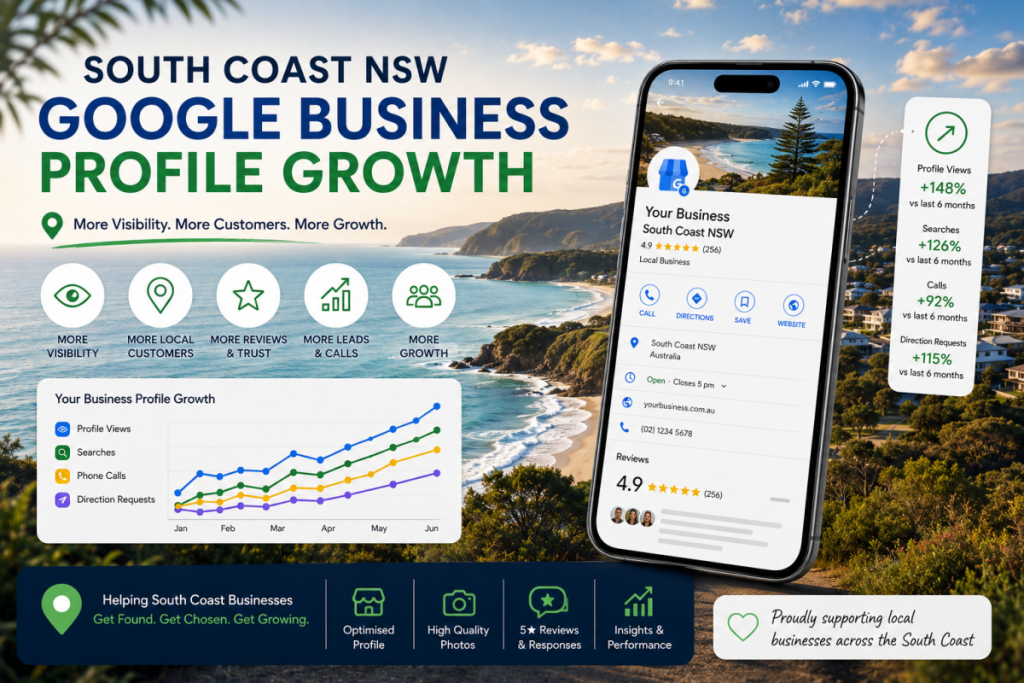
Current exterior, interior, team, product and project photography helps customers recognise and trust the business. Authentic images are generally more useful than generic stock photographs.
In practice, this means asking three questions before adding more activity: what customer behaviour are we trying to influence, what evidence will tell us whether it worked, and what will the business do differently when that evidence arrives? Those questions keep Google Business Profile South Coast NSW connected to commercial outcomes rather than platform activity.
A useful review also separates leading indicators from business outcomes. Impressions, clicks and engagement can tell you whether a message is reaching people, but they do not prove the activity is profitable. Qualified enquiries, booked appointments, sales, repeat purchases and margin provide a stronger basis for deciding what to scale.
For businesses operating across Australia, Canberra or the NSW South Coast, the answer can vary by market. Search volume, audience size, seasonality, travel distance and competitive intensity are not identical. The strategy should be consistent enough to manage but flexible enough to reflect those differences.
A second consideration is customer intent. Two people can use similar language while being at very different stages of a decision. One may be researching, another comparing providers and another ready to buy today. Good marketing gives each of them enough information to move forward without forcing every visitor through the same message. This is why useful landing pages and articles combine education, evidence and a clear commercial next step. Measurement should also be designed before campaigns are scaled. Decide which actions genuinely indicate value, how calls and forms will be attributed, who will assess lead quality and how frequently performance will be reviewed. When those foundations are missing, teams often react to surface metrics and make changes before enough evidence exists. When they are in place, optimisation becomes calmer and more accountable. Finally, remember that consistency does not mean rigidity. A strategy can have clear principles while still changing as search behaviour, competitors, costs and customer expectations evolve. Regular review should identify what has changed, what has not and which assumption deserves testing next. That discipline is more valuable than chasing every new platform feature. That local context is especially important for owner-led and mid-sized businesses. A national benchmark can be interesting, but the decision that matters is whether the next dollar invested can produce an acceptable return in the market the business can actually serve. Capacity, response time and sales follow-up therefore belong in the marketing conversation.
A practical checkpoint
Before increasing budget, make sure the offer is clear, tracking reflects meaningful outcomes, the landing experience answers the obvious questions and somebody is responsible for reviewing lead quality. More traffic amplifies both strengths and weaknesses.
Reviews should become an operational habit
Ask satisfied customers consistently rather than in occasional bursts. Respond professionally, avoid incentives that breach platform rules, and use feedback to identify recurring strengths and problems.
In practice, this means asking three questions before adding more activity: what customer behaviour are we trying to influence, what evidence will tell us whether it worked, and what will the business do differently when that evidence arrives? Those questions keep Google Business Profile South Coast NSW connected to commercial outcomes rather than platform activity.
A useful review also separates leading indicators from business outcomes. Impressions, clicks and engagement can tell you whether a message is reaching people, but they do not prove the activity is profitable. Qualified enquiries, booked appointments, sales, repeat purchases and margin provide a stronger basis for deciding what to scale.
For businesses operating across Australia, Canberra or the NSW South Coast, the answer can vary by market. Search volume, audience size, seasonality, travel distance and competitive intensity are not identical. The strategy should be consistent enough to manage but flexible enough to reflect those differences.
A second consideration is customer intent. Two people can use similar language while being at very different stages of a decision. One may be researching, another comparing providers and another ready to buy today. Good marketing gives each of them enough information to move forward without forcing every visitor through the same message. This is why useful landing pages and articles combine education, evidence and a clear commercial next step. Measurement should also be designed before campaigns are scaled. Decide which actions genuinely indicate value, how calls and forms will be attributed, who will assess lead quality and how frequently performance will be reviewed. When those foundations are missing, teams often react to surface metrics and make changes before enough evidence exists. When they are in place, optimisation becomes calmer and more accountable. Finally, remember that consistency does not mean rigidity. A strategy can have clear principles while still changing as search behaviour, competitors, costs and customer expectations evolve. Regular review should identify what has changed, what has not and which assumption deserves testing next. That discipline is more valuable than chasing every new platform feature. That local context is especially important for owner-led and mid-sized businesses. A national benchmark can be interesting, but the decision that matters is whether the next dollar invested can produce an acceptable return in the market the business can actually serve. Capacity, response time and sales follow-up therefore belong in the marketing conversation.
Connect the profile to strong local pages
The website should reinforce the same services and locations while providing deeper information. Profile and website work together; neither should be treated as an isolated SEO trick.
In practice, this means asking three questions before adding more activity: what customer behaviour are we trying to influence, what evidence will tell us whether it worked, and what will the business do differently when that evidence arrives? Those questions keep Google Business Profile South Coast NSW connected to commercial outcomes rather than platform activity.
A useful review also separates leading indicators from business outcomes. Impressions, clicks and engagement can tell you whether a message is reaching people, but they do not prove the activity is profitable. Qualified enquiries, booked appointments, sales, repeat purchases and margin provide a stronger basis for deciding what to scale.
For businesses operating across Australia, Canberra or the NSW South Coast, the answer can vary by market. Search volume, audience size, seasonality, travel distance and competitive intensity are not identical. The strategy should be consistent enough to manage but flexible enough to reflect those differences.
A second consideration is customer intent. Two people can use similar language while being at very different stages of a decision. One may be researching, another comparing providers and another ready to buy today. Good marketing gives each of them enough information to move forward without forcing every visitor through the same message. This is why useful landing pages and articles combine education, evidence and a clear commercial next step. Measurement should also be designed before campaigns are scaled. Decide which actions genuinely indicate value, how calls and forms will be attributed, who will assess lead quality and how frequently performance will be reviewed. When those foundations are missing, teams often react to surface metrics and make changes before enough evidence exists. When they are in place, optimisation becomes calmer and more accountable. Finally, remember that consistency does not mean rigidity. A strategy can have clear principles while still changing as search behaviour, competitors, costs and customer expectations evolve. Regular review should identify what has changed, what has not and which assumption deserves testing next. That discipline is more valuable than chasing every new platform feature. That local context is especially important for owner-led and mid-sized businesses. A national benchmark can be interesting, but the decision that matters is whether the next dollar invested can produce an acceptable return in the market the business can actually serve. Capacity, response time and sales follow-up therefore belong in the marketing conversation.
How this fits into a wider digital strategy
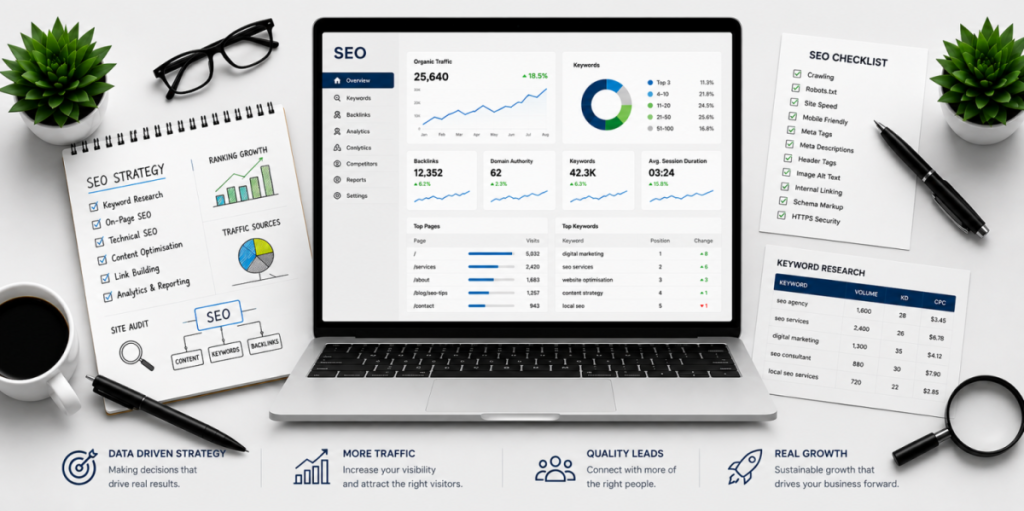
SEO rarely works in isolation. Search, paid media, social proof, website usability and follow-up all influence the eventual result. A customer might first see a social post, later search the brand, compare several providers and finally return through a direct visit. Reporting should acknowledge that journey rather than giving all credit to the last click.
The most useful planning therefore starts with the business objective and works backwards. Decide which customers matter, what they need to believe, which channels can reach them efficiently and what the website must do once they arrive. That produces a clearer investment case than starting with a platform and looking for somewhere to spend money.
Common mistakes to avoid
- Publishing or advertising without a defined commercial objective.
- Measuring volume while ignoring lead quality and profitability.
- Creating near-identical location content instead of demonstrating genuine local relevance.
- Allowing automation to make strategic decisions that require business context.
- Sending valuable traffic to pages that do not answer customer questions or provide a clear next step.
Frequently asked questions
How long should I give a campaign before judging it?
There is no universal period. Paid campaigns can generate directional data quickly, while SEO normally requires a longer view. The right timeframe depends on traffic volume, conversion frequency, sales cycle and the size of the change being tested.
Should Canberra and South Coast campaigns be separated?
They should be separated when customer intent, budgets, offers, seasonality or performance are materially different. Separation for its own sake creates administration; separation that improves decisions is useful.
Can AI do most of this work now?
AI can accelerate research, analysis and production, but it does not know your margins, capacity, customer conversations or strategic priorities unless those inputs are deliberately provided. Human judgement remains important.
Want to apply this to your business?
If you are considering Google Business Profile South Coast NSW and want a practical view of where the opportunity sits, I can help you assess the market, the website and the numbers before you commit to more activity.